Postcode or region cuts
Keep geographic definitions consistent for every team reading the same map.

Postcode segmentation and regional customer segments
AI-powered customer segmentation by location helps teams compare postcode and regional customer segments alongside revenue, product demand, and channel mix so planning reflects where behaviour differs geographically.
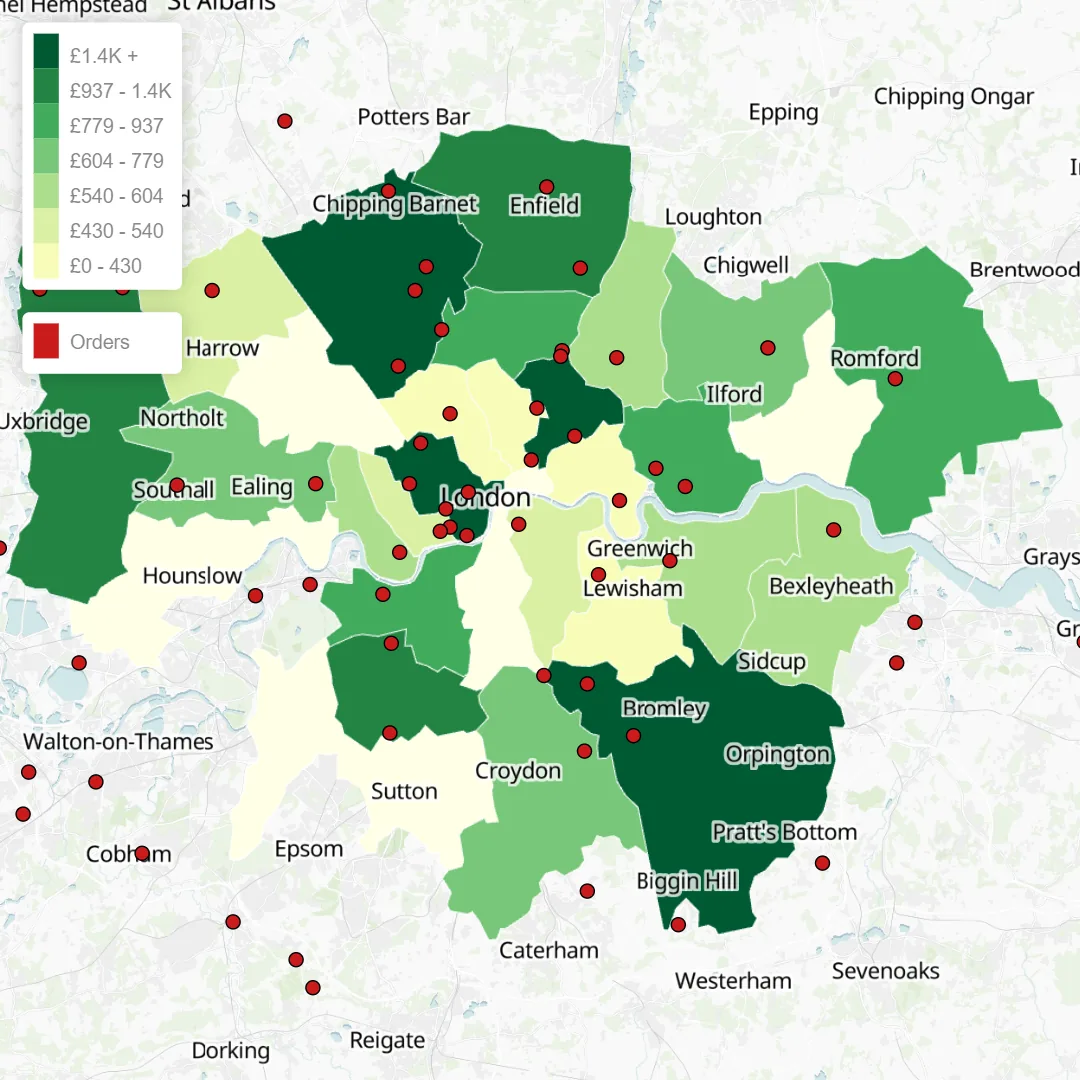
Tables rank cohorts, but geography shows whether value sits in tight clusters or thin ribbons. That shared view speeds planning for local offers, stock buffers, and regional creative when everyone references the same export grain.
Get early access to customer segmentation by postcode, region, product, revenue, order value and channel.
Customer segmentation by location groups buyers using UK postcode or region alongside commercial fields you are allowed to join. Traditional segmentation may start from value, lifecycle, or survey-led clusters without preserving place. Geographic segmentation deliberately keeps location in the frame so hypotheses stay grounded in how demand actually distributes across the country.
When product category or SKU travels with geography, you can discuss segment differences in assortment fit, not only in spend tiers. Repeat or frequency flags, when defined consistently in your export, help contrast loyalty-heavy postcodes with acquisition-heavy corridors.
Keep geographic definitions consistent for every team reading the same map.
Plot high-value pockets when data policies allow those joins at aggregate grain.
See how assortment strength shifts between UK corridors for segment-specific range reviews.
Compare online-only buyers versus mixed-channel behaviour when exports stay clean.
Use repeat flags when your warehouse definition matches how marketing counts loyalty.
Layer permitted segment keys next to geography without importing full identity graphs.
A CRM-led segment flags high lifetime value nationally, but the insight team maps the same cohort by postcode and finds value concentrated in three urban rings with different category mixes. Marketing pauses a one-size message and proposes regional creative tests. MapDemand.ai is intended to make that geographic read faster from the weekly export, not to replace the CRM.
Respect consent, contracts, and minimisation rules for any customer-level fields. Prefer aggregates where policies require them.
Use these insights with your existing legal, privacy, and CRM governance processes.
Customer segmentation by location groups buyers using UK postcode or region alongside revenue, order value, product mix, channel, and repeat or frequency flags when exports allow. The goal is to see where different buying behaviours concentrate on a map rather than only in ranked tables.
Traditional segmentation often starts with value tiers, lifecycle stages, or attitudinal clusters that may not preserve place. Geographic segmentation keeps postcode or region attached so marketing, trading, and operations discuss the same spatial clusters. Both approaches can coexist when governance allows the joins.
Spatial grain reveals clusters and corridors spreadsheets flatten, which aids local campaigns, fulfilment planning, and regional prioritisation grounded in owned sales data.
Yes when geography travels with categories or SKUs in your extracts so merchandising views stay consistent with privacy rules.
Pre-launch focus stays on transactional fields you supply. Bundled demographic enrichment from third parties is not part of the product today. If you hold compliant demographic attributes already, future releases may make overlays easier, but that work is planned rather than promised.
No. MapDemand.ai targets geographic segmentation of sales behaviour on maps. It does not replace CRM identity resolution, consent tooling, or enterprise segmentation engines.
Yes. Ordered history with postcode is enough for many exploratory segment maps layered next to CRM or insight workflows when policies permit.
When your export marks first-time versus repeat buyers by geography, you can compare loyalty pockets to acquisition-heavy postcodes. Definitions must stay consistent with how your warehouse counts repeats.
Use the form below to get early access if geographic segmentation views matter for your team.