Revenue by postcode
See where attributable sales concentrate relative to blended national figures you see in dashboards.

ROAS planning with UK location insight
AI-powered retail campaign insight helps performance and commerce teams ground ROAS planning in postcode-level revenue, order patterns, conversion rates, and average order value so geo-targeted decisions are better prioritised.
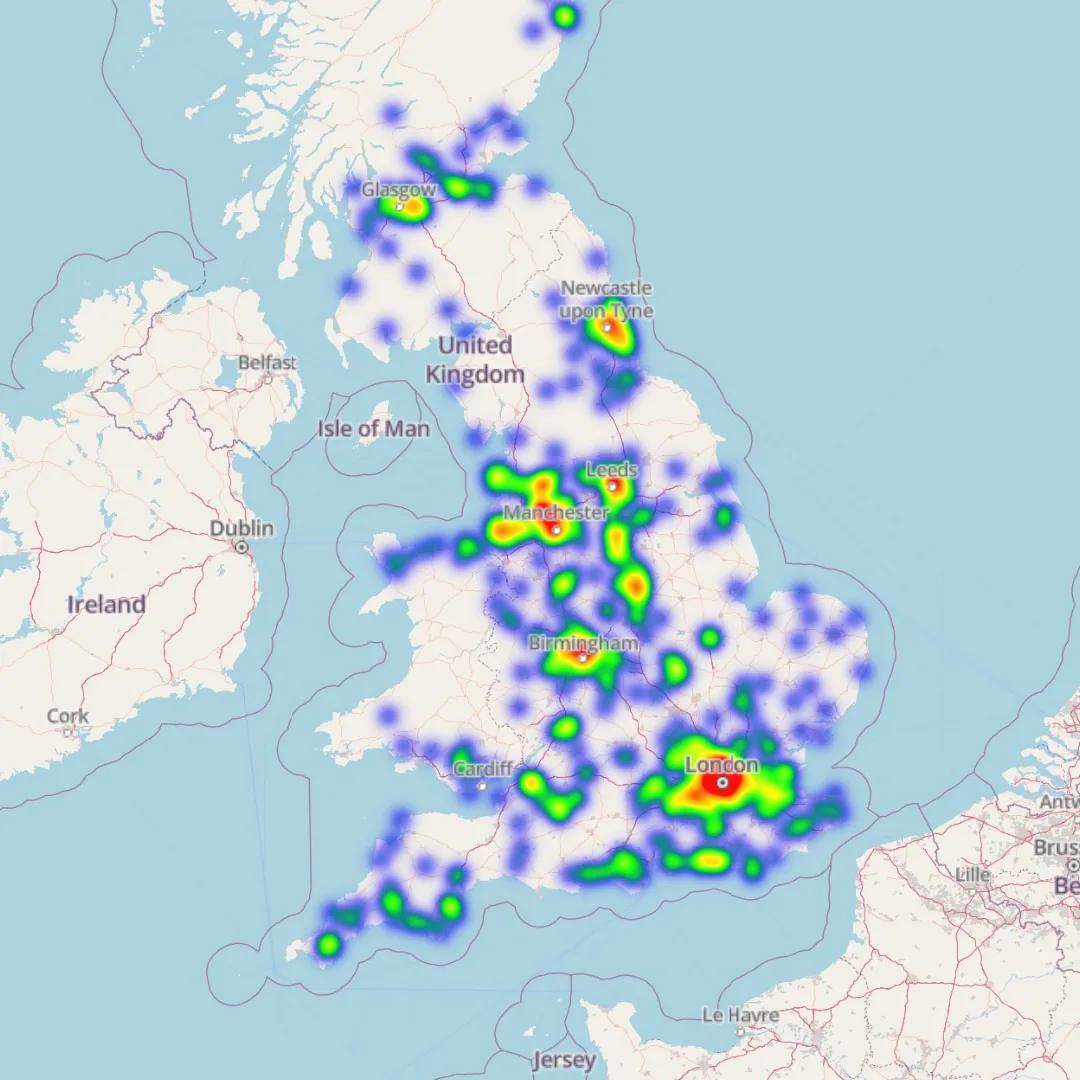
Broad geography can bury weak pockets of spend alongside strong ones. Showing demand spatially complements whatever attribution narrative your platforms already emit and gives finance a commerce-led view of where sales actually land.
Get early access to AI-powered location insight for campaign planning, regional performance review, conversion patterns and average order value analysis.
ROAS planning here means using your export to discuss whether media geography lines up with where revenue and orders concentrate, and whether optional conversion rate or average order value fields by area suggest follow-up. This is planning and analysis, not optimisation inside an ad account.
When a region shows healthy spend signals in platform reports but weak attributable sales in your own postcode-level commerce file, maps help frame the disconnect for joint review. The opposite pattern can appear too. Neither case proves causality without your existing measurement discipline.
See where attributable sales concentrate relative to blended national figures you see in dashboards.
Compare neighbourhoods or regions ahead of tightening geo exclusions or inclusions in your ad tools.
Marry category strength to place before promoting SKUs geographically in briefings.
Use optional commerce metrics strictly when data quality and definitions support fair regional comparison.
When exports separate paid versus organic acquisition cleanly, relate spend-heavy sources to geography cautiously.
Keep date ranges consistent with finance reporting so ROAS workshops reference one timeline.
A performance team sees stable blended ROAS nationally. Mapped postcode revenue shows most attributable sales from paid social still come from two metro rings while several outlying geographies drive spend but thin orders. Leadership agrees to review geo exclusions in the ad platform after a fulfilment check, using MapDemand.ai only as the geographic brief from the commerce export.
Align any campaign source or conversion fields with how finance and marketing already define attribution before mapping.
Use this insight to support ROAS planning and prioritisation alongside your existing platform reporting and finance reviews.
ROAS means return on ad spend: revenue attributed to advertising divided by media cost over a period. It does not describe profit by itself and depends on your attribution choices.
No dataset guarantees higher ROAS. Location insight helps teams weigh where geographic tests might be sensible before scaling national campaigns. MapDemand.ai informs planning; it does not replace ad platform reporting or promise efficiency gains.
When spend concentrates in geographies with weak attributable revenue in your commerce export, maps give a neutral place-based view for workshops. Actual waste still depends on platform metrics, incrementality tests, and finance definitions your team already owns.
No. MapDemand.ai is not an ad manager. It supports geography-led ROAS conversations by revealing where orders and revenue already cluster.
No bids, budgets, or campaign hosting. Your team keeps execution inside native ad tools.
Start with postcode or region plus revenue and orders. Layer category, channel, campaign source, conversion rate, average order value, or time period only when extraction stays clean and definitions align with how finance reads the file.
When conversion rate or average order value exists by geography, maps compare regions fairly. Nothing promises uplift; geography simply grounds hypotheses.
Use demand maps to agree which geographies deserve tests, then rely on your ads stack for trafficking and measurement. MapDemand.ai stays on the analysis side for both pages.
Use the form below to get early access when you need place-based planning beside platform metrics.