Postcode and regional revenue views
See where revenue concentrates and where regional contribution looks softer than peer areas when your export supports fair comparison.

UK retail whitespace and gap analysis
AI-powered retail whitespace analysis helps UK retail, ecommerce, and omnichannel teams compare postcode-level orders, revenue, category mix, and coverage so you can spot under-served regions, penetration gaps, and market opportunity before budgets are committed.
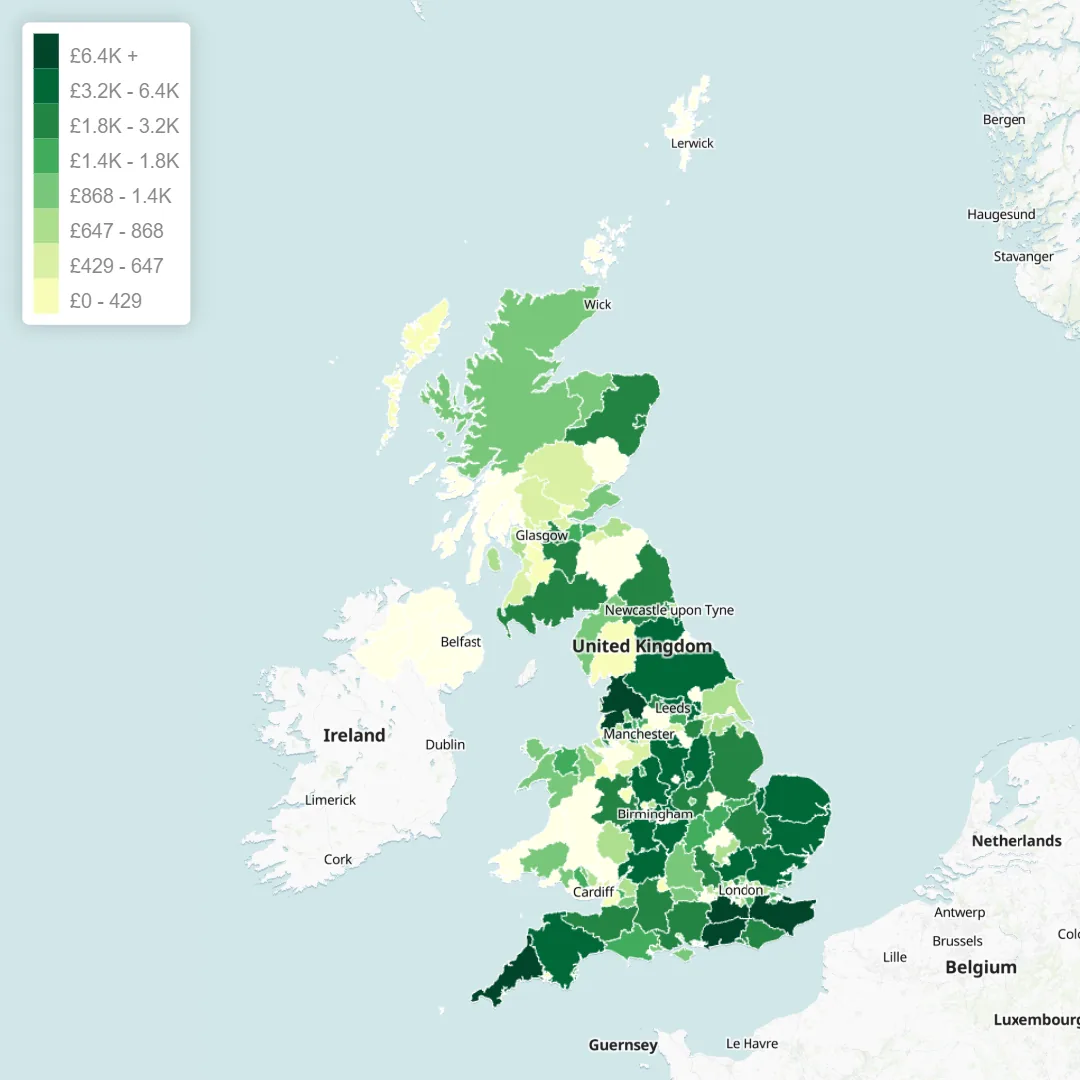
National totals hide where orders cluster, where average order value diverges, and where fulfilment or marketing coverage may lag visible demand. For growth, merchandising, and commercial leads, whitespace conversations are often the fastest way to align on which UK regions deserve a second look before you scale campaigns, range changes, or expansion tests.
Get early access to AI-powered postcode insight for gap analysis, coverage gaps, market opportunity and under-served regions.
Retail whitespace analysis (sometimes written white space) looks for areas where revenue, penetration, or coverage appears weaker than you would expect from other signals in the same export, such as order density, category mix, or comparable regions. It connects naturally to gap analysis and market opportunity reviews, but the emphasis stays on geography and commercial grain you can act on in trading and operations meetings.
Gap analysis can cover any performance shortfall against a target. Whitespace analysis usually narrows the question to where potential or demand looks misaligned with realised sales or coverage at postcode or regional level. You can run both lenses from one consistent extract when geography and revenue travel together.
Penetration views ask where you already trade but may still be underweight versus peers. Opportunity views ask where revenue is modest today but signals such as order growth, category strength, or proximity to high-performing corridors suggest cautious follow-up. MapDemand.ai is intended to help teams visualise both sides without claiming that any pattern guarantees growth.
See where revenue concentrates and where regional contribution looks softer than peer areas when your export supports fair comparison.
Layer order counts, average order value, or channel splits to discuss where demand signals and sales outcomes diverge.
Surface postcodes or territories that lag similar areas on orders or revenue so gap reviews start from a shared map.
Split views by product category to see where assortment or merchandising may fit local demand unevenly.
When store, territory, or fulfilment fields exist, relate them to demand maps to discuss service or stock alignment without promising fixes.
Give finance, operations, and marketing one geographic frame so whitespace hypotheses stay tied to the same export rules.
An omnichannel UK retailer notices strong online order density in two postcode clusters but revenue per order sits below neighbouring regions. Category maps show footwear over-indexing while accessories trail. The team treats the clusters as whitespace candidates: they schedule a fulfilment and range review rather than expanding paid media nationally. MapDemand.ai is designed to make that kind of geographic comparison faster from the same weekly export.
Use one extract where geographic and commercial columns stay consistent. Optional fields strengthen whitespace reads when definitions match across teams.
Use these outputs to support decisions, testing, and regional prioritisation with your existing commercial process.
Retail whitespace analysis compares postcode or regional revenue, orders, coverage signals, and product demand so you can see where performance looks weaker than you would expect from comparable areas or channels. It is exploratory and supports workshops and follow-up analysis rather than automatic prioritisation.
Gap analysis is a broad idea of comparing current performance to a target, benchmark, or plan. Whitespace analysis usually stresses geography, penetration, or coverage where demand or potential appears stronger than realised sales. The same export can support both conversations when postcode and revenue sit together.
Penetration depth describes where you already sell but share or coverage may still be thin next to similar regions. Opportunity breadth describes where revenue is modest today but order density, category interest, or adjacent strong areas suggest follow-up investigation. Maps help you discuss both without treating either view as proof of success.
When you break totals down by postcode or region you can compare order counts, revenue, average order value, and channel mix side by side. Areas with healthy demand signals but softer revenue, or strong category skew with low basket penetration, often become whitespace candidates for commercial review.
If one category over-indexes in a region while overall revenue lags peers, assortment, stock, or marketing coverage may be misaligned. Splitting maps by product category helps teams see where demand shape and commercial outcomes diverge so follow-up can stay grounded in your own export.
Yes, when your files include UK postcode or region fields alongside performance columns. MapDemand.ai is being built to map those fields visually during early access. Get early access to test as releases open.
No specialist GIS team is assumed. The product is intended for commercial, marketing, growth, and ecommerce users who work with everyday CSV-style exports from ecommerce, OMS, or reporting tools.
MapDemand.ai is in pre-launch. Features described here are planned or available only to early-access participants. Get early access if you would like an invitation when the next mapping release is ready.
Use the form below to get early access if postcode-level gap and coverage reviews matter for your retail or ecommerce team.